
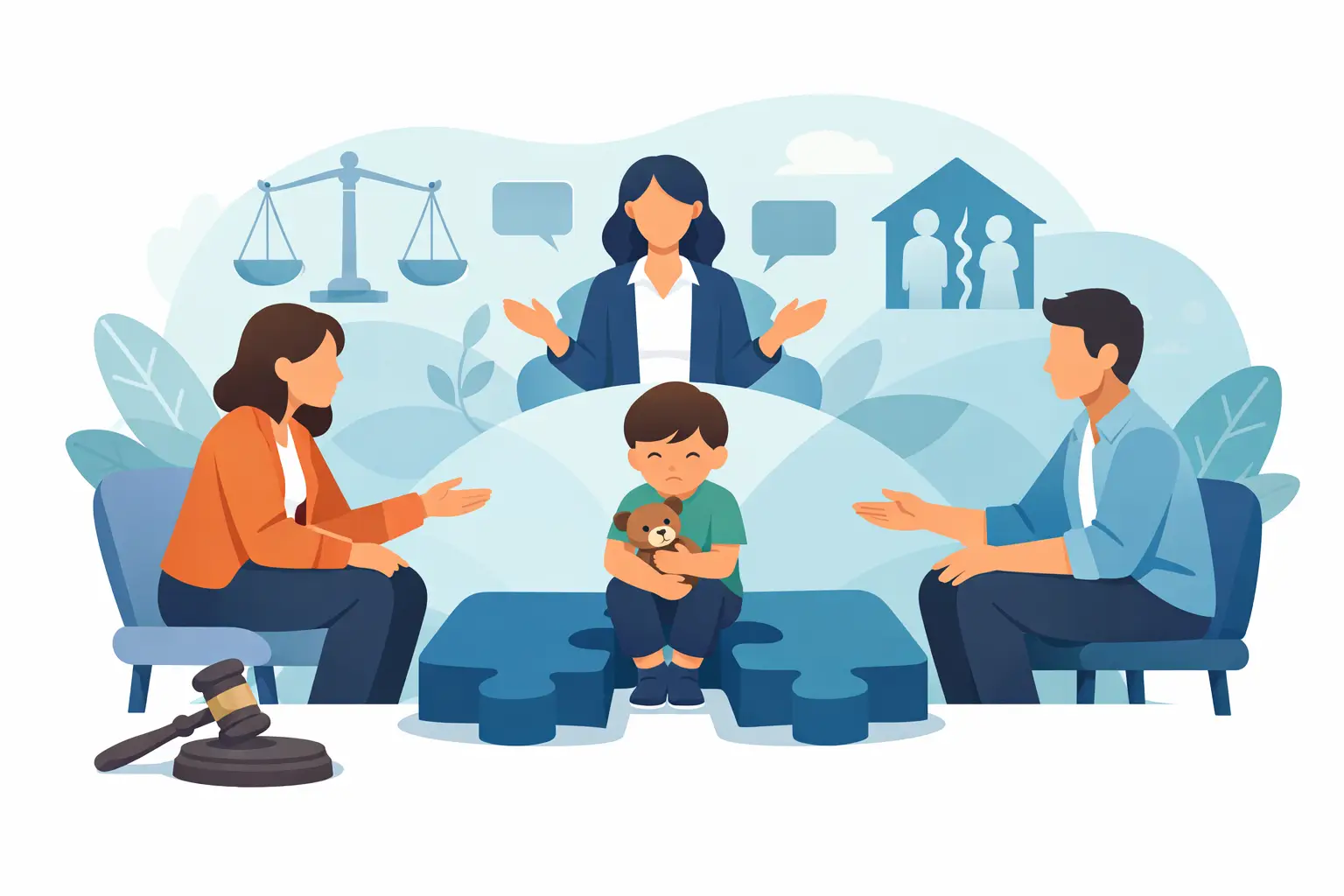
When parents are stuck arguing over pickup times, holidays, school decisions, or where a child will live, the problem usually goes deeper than the calendar. Child custody dispute resolution is not just about settling one disagreement. It is about creating a way for parents to make decisions, lower conflict, and give children more stability during a hard season.
For many families, court feels like the only option because the conflict is already wearing everyone down. But court is not always the best place to build a parenting plan that real people can actually follow. A judge may have the authority to decide, but a judge does not live your life, know your child the way you do, or understand the details that matter at 7:30 on a school morning.
What child custody dispute resolution really means
At its core, child custody dispute resolution is the process of working through parenting disagreements in a structured way so decisions can be made fairly and clearly. Sometimes that happens in court. Often, it can happen through mediation, where a neutral third party helps parents talk through issues, identify options, and reach an agreement.
That distinction matters. Litigation is designed to produce a legal ruling. Mediation is designed to help families solve problems. Those are not the same thing.
In a custody dispute, the biggest issues are often legal on paper but emotional in practice. One parent may be worried about losing time. The other may be worried about consistency, safety, or communication. Both may be carrying resentment from the relationship itself. If those concerns are not addressed, even a technically solid parenting plan can fall apart quickly.
Why court is not always the best answer
Sometimes court is necessary. If there are serious safety concerns, abuse, threats, or a complete refusal to participate in good faith, a judge may need to step in. Mediation is not a magic fix for every situation, and pretending otherwise does not help anyone.
But in many families, the fight is less about danger and more about distrust, frustration, and different ideas about what is fair. In those cases, court can make things worse. The process is expensive, slow, and stressful. It also tends to turn parents into opponents, which is a real pain in the neck when they still have to co-parent after the hearing is over.
A courtroom also rewards positions more than solutions. Each side argues for what it wants. Mediation makes room for something more useful – a workable plan that both parents understand and can live with.
How mediation supports child custody dispute resolution
Mediation gives parents a structured setting to talk through custody and parenting issues with the help of a neutral professional. The mediator does not take sides and does not act like a judge. Their role is to guide the conversation, keep it productive, and help both people move from argument to agreement.
That neutrality is a big part of why the process works. When people feel heard instead of judged, they are often more willing to be flexible. That does not mean giving up important concerns. It means discussing them in a way that leads somewhere.
In mediation, parents can work through questions such as where the child will spend weekdays and weekends, how holidays will be divided, how transportation will be handled, and how decisions about school, medical care, and activities will be made. They can also address the practical issues that often trigger repeat conflict, like communication rules, schedule changes, travel notice, and what happens when a child is sick.
These details may seem small until they are not. A parenting plan usually works better when it is specific enough to prevent confusion but flexible enough to handle real life.
The value of practical detail
A vague agreement can create just as many problems as no agreement at all. If a parenting plan says the parents will share holidays but does not explain which holidays, what times, or how exchanges will happen, the same argument can come back every few months.
Good child custody dispute resolution focuses on clarity. Who picks up from school? What happens if one parent is running late? How are extracurricular costs handled? Can a missed visit be made up? These questions are not petty. They are the day-to-day mechanics of parenting after separation.
This is where mediation tends to be especially helpful. It allows room for the conversation behind the conflict. Maybe one parent wants more structure because communication has been unreliable. Maybe the other wants flexibility because of a changing work schedule. When those realities are discussed openly, it becomes easier to design a plan that reflects actual family life.
What parents often get wrong
One common mistake is treating custody as a contest to win. That mindset usually leads to rigid demands, defensive communication, and more distrust. It also puts children in the middle, even when no one intends to do that.
Another mistake is focusing only on equal time without talking about what the child actually needs. Equal is not always the same as workable. A schedule that looks fair on paper may be hard on a very young child, may clash with school routines, or may create constant exchange stress. In other families, a balanced arrangement can work very well. It depends on the child, the parents, and the logistics.
Parents also sometimes assume that if they agree on the big issues, the rest will sort itself out. Usually, it does not. Small unresolved questions have a way of becoming big recurring fights.
Keeping the child at the center
The phrase gets used a lot, but keeping the child at the center is more than saying both parents love their child. It means asking practical questions. What schedule supports rest, school, friendships, and routine? How will the child stay connected to both parents? How can transitions be less tense? What kind of communication will help the child feel secure rather than caught between adults?
Children do better when the adults around them are more predictable. They also do better when they are not exposed to repeated loyalty conflicts. Mediation can help lower that pressure by giving parents a calmer way to make decisions.
When mediation works best
Mediation works best when both parents are willing to participate honestly, exchange information, and look for solutions. They do not have to like each other. They do not even have to agree on much at the start. They do need to be open to a process that is problem-solving rather than purely adversarial.
It can be especially useful for parents who want privacy, faster resolution, and more control over the outcome. Instead of waiting for a court date and handing the decision to someone else, they can work through issues directly and create terms that fit their family.
This approach can also be more accessible than people expect. Remote mediation by video can make scheduling easier, reduce travel stress, and allow parents in different homes or even different cities to participate without adding more disruption. For families in Washington, including Benton, Franklin, and Yakima counties, that convenience can make a difficult process feel more manageable.
What to expect from the process
Most mediation sessions start by identifying the main areas of disagreement and setting ground rules for communication. From there, the conversation moves issue by issue. Some topics resolve quickly. Others take more time because they touch on trust, old conflict, or competing priorities.
A good mediator keeps the discussion focused and balanced. If emotions rise, that is not unusual. Custody decisions affect children, routines, and identity as a parent. The goal is not to remove emotion entirely. The goal is to keep emotion from taking over the process.
As agreements take shape, they can be organized into clear written terms. That clarity matters because it helps both parents understand what they are agreeing to and reduces the chances of future misunderstandings.
At Tri-Cities Mediation, this kind of work is centered on neutrality, practical problem-solving, and helping families move toward fair agreements without adding more conflict than they already carry.
A better path does not mean an easy one
Child custody dispute resolution is still hard. There is no getting around that. You are making decisions about your children while managing stress, grief, and sometimes anger. But hard does not have to mean destructive.
A calmer process can protect more than your budget and schedule. It can protect your ability to co-parent, your child’s sense of stability, and your chance of creating an agreement that holds up in real life. If the goal is not to win a fight but to build a workable future, mediation is often the place where that shift begins.
The best custody agreement is usually not the one that sounds strongest in an argument. It is the one your family can actually live with, follow, and grow from.
Leave a Reply